The science
Hangxiety: why alcohol spikes next-day anxiety
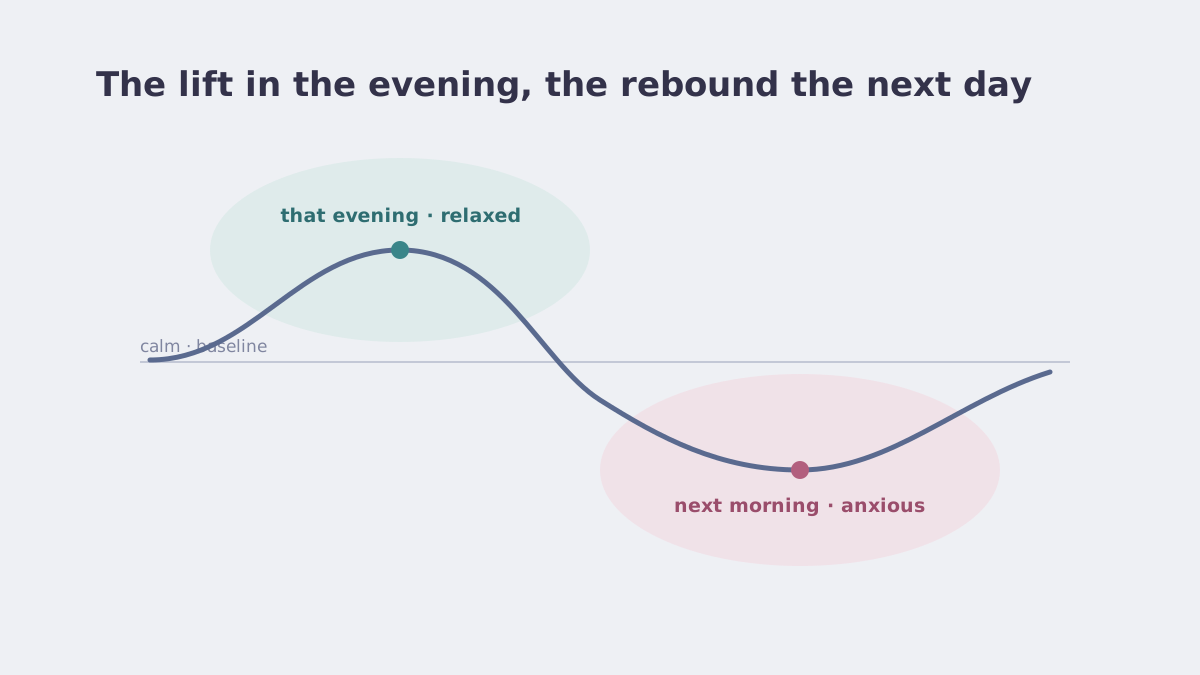
That uneasy, jittery morning after drinking has a name and a mechanism. Here's why alcohol calms you at night and rebounds into anxiety the next day — and what helps.
You don't have to go fully dry to feel better. A calm, judgment-free framework for drinking less on your own terms — set a number, see it, and bring it down.
You don’t have to quit drinking to change your relationship with it. For most people, the goal isn’t sobriety — it’s drinking less, and more deliberately. This is a calm framework for doing exactly that, on your own terms, without the shame spiral.
“I should drink less” is a wish. “No more than 10 standard drinks this week” is a goal — because you can count it. The single most useful move is to convert a vague intention into one specific, countable target.
That’s where standard drinks come in: they let you measure a strong IPA, a glass of wine, and a shot on the same scale, so your weekly number actually means something. Setting a real weekly drinking goal is step one of everything below.
You can’t steer what you can’t see. Counting by “number of drinks” hides the truth — three light beers and three strong IPAs are wildly different weeks. Logging by standard drinks turns a fuzzy sense of “not too much” into a number you can look at, which is the whole reason tracking your drinking works. This isn’t about guilt; it’s about replacing a guess with a fact.
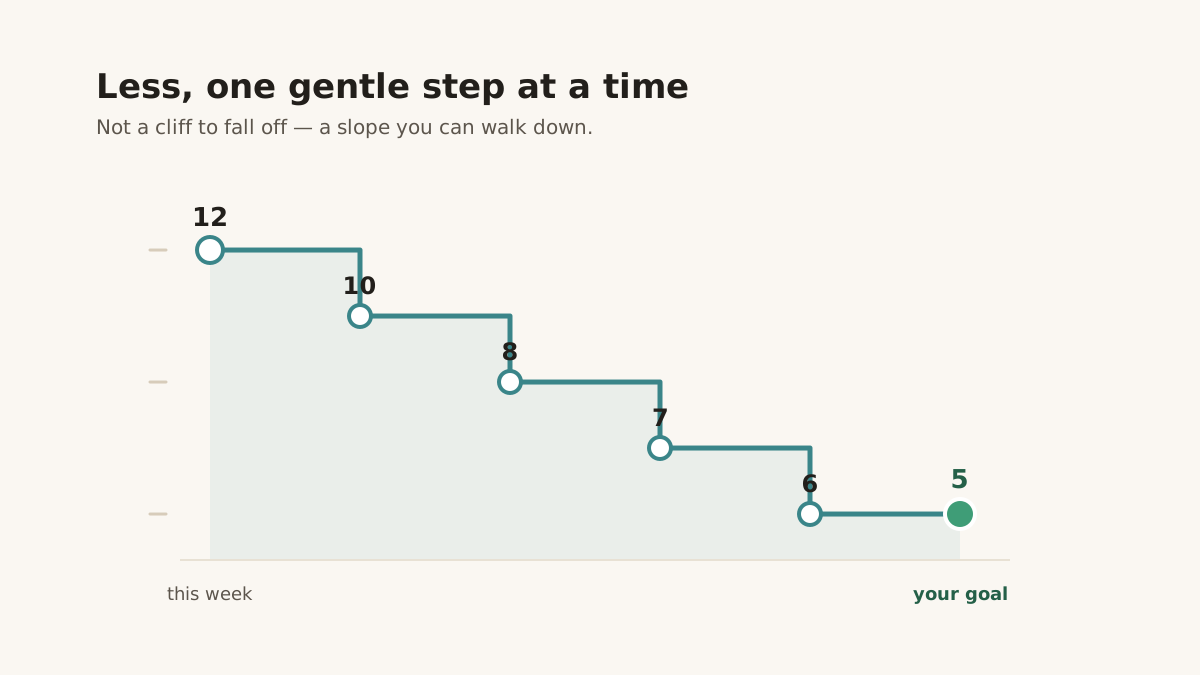
Once you can see your number, lower it on purpose. You don’t have to crater it — a gentle step-down is more sustainable than a dramatic cut. Drop your weekly target a little at a time toward a level you’re happy with, and let the trend do the work. This is the approach reputable health bodies recommend too: Harvard Health’s guidance on curbing drinking centers on setting a limit and reducing toward it, not white-knuckle abstinence.
A few mechanics make the reduction easier:
The mindset matters. “I’ve used 7 of my 10” feels like restriction; “I have 3 left this week” feels like room to spend. Same number, very different relationship with it. Aiming at a goal you’re under is motivating; policing a list of banned things is exhausting. Pick the framing that keeps you going.
There’s no date when you’re “done.” Drinking less is an ongoing trend — a number that drifts down and stays down. Some weeks will be higher; that’s data, not failure. What matters is the direction over a month or two, not any single night.
This framework is exactly what PitchCount is built around: set a weekly goal (fixed, or stepping down over time), log each drink in one tap, and watch your week move against the line — with the calories adding up as a second, often motivating, number. “Drink less” stops being a vague resolution and becomes something you can actually see and steer.
If you think you may be physically dependent on alcohol, please talk to a healthcare professional before making big changes — this framework is for mindful moderation, not treatment.
Yes. Most people who want a healthier relationship with alcohol don't need to quit — they need to drink less, more deliberately. Setting a specific weekly number, tracking it honestly, and lowering it over time works for a lot of people without going fully dry.
Pick one specific, countable goal — a number of standard drinks per week — instead of a vague "drink less." A number you can see is something you can actually steer; "less" isn't.
For most people who aren't dependent, a gradual step-down is sustainable and less daunting than going cold turkey. If you think you may be physically dependent on alcohol, talk to a healthcare professional before making big changes.
There's no fixed timeline. Treat it as an ongoing trend, not a deadline — the goal is a number that drifts down and stays down, which is more durable than a dramatic short-term change.
This is general information, not medical advice. If you're concerned about your drinking or think you may be dependent, please talk to a healthcare professional.
That uneasy, jittery morning after drinking has a name and a mechanism. Here's why alcohol calms you at night and rebounds into anxiety the next day — and what helps.
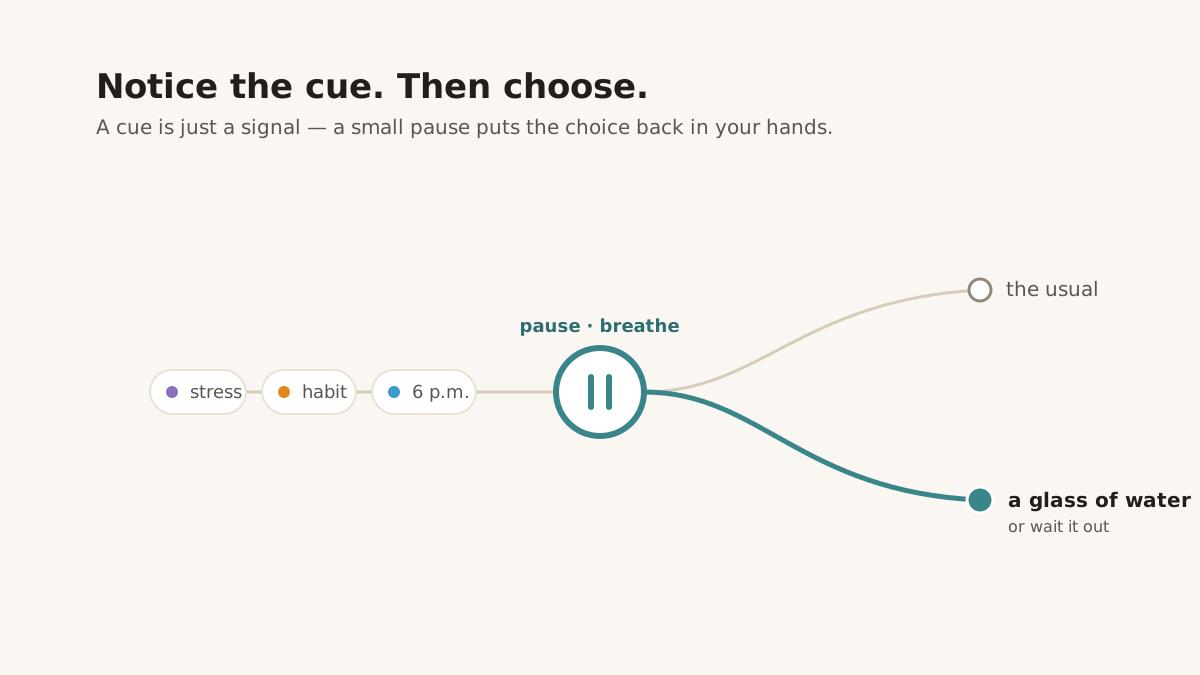
Most overshooting traces back to a handful of cues — stress, boredom, habit, certain people or places. Here's how to spot your triggers and build a calm pause before the next drink.
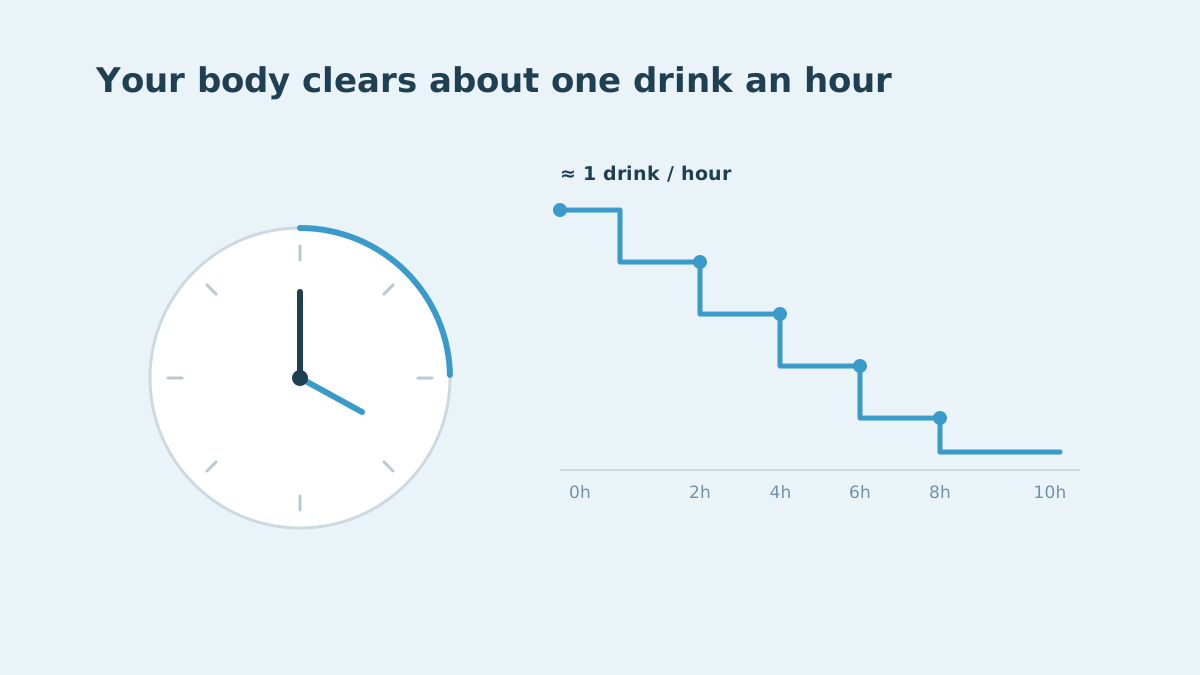
Your body clears roughly one standard drink an hour, and nothing speeds it up. Here's how alcohol is metabolized, how long tests can detect it, and what changes the rate.