The science
Hangxiety: why alcohol spikes next-day anxiety
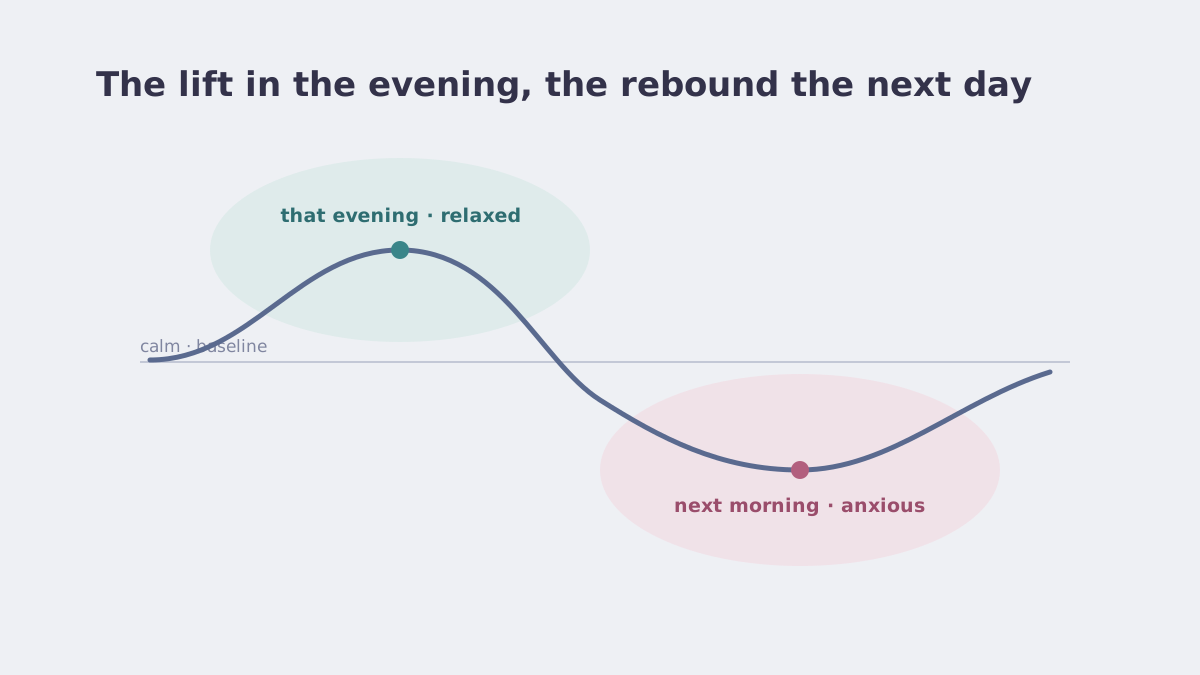
That uneasy, jittery morning after drinking has a name and a mechanism. Here's why alcohol calms you at night and rebounds into anxiety the next day — and what helps.
You can't change what you can't see. Here's why logging every drink — in standard drinks — turns a vague habit into a number you can steer, and how to start in under a minute.
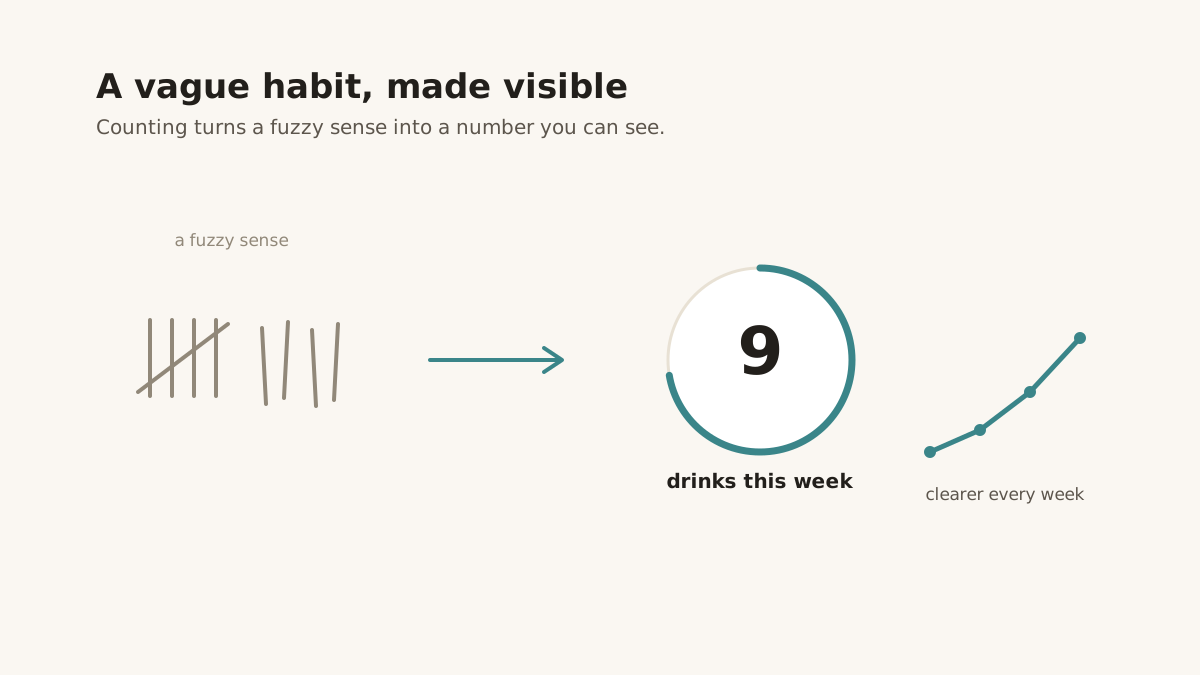
The reason most people underestimate how much they drink isn’t denial — it’s arithmetic. You remember nights, not totals, and the totals are where the truth lives. Tracking fixes that, and it’s the quiet engine behind drinking less.
Tracking your intake is one of the standard, recommended strategies for cutting back — Kaiser Permanente lists keeping track of what you drink among its core tactics for drinking less. The reason is simple: a vague “I didn’t have that much” can’t be acted on, but “14 standard drinks this week, up from 11” can. The number gives you something to push against.
There’s also a quieter effect. For a lot of people, simply seeing the number nudges it down — the act of logging makes the next drink a small, conscious decision instead of an automatic one.
Tracking only works if the unit is honest. “Four drinks” tells you nothing if two were light lagers and two were 8% IPAs — that’s the difference between a modest night and a heavy one. Logging in standard drinks puts everything on one scale, so your weekly total actually compares week to week. It’s the difference between counting containers and counting alcohol.
Once you have a few weeks of honest data, patterns surface that you can act on:
You don’t need a spreadsheet or a perfect system. Two rules:
That’s the whole idea behind PitchCount: log a drink in one tap, watch it convert to standard drinks, and see your week build against your goal. The hard part of drinking mindfully isn’t willpower — it’s information. Tracking gives you the information.
For many people, yes. Tracking is a recommended strategy for cutting back because it replaces a vague sense of "not too much" with a real number — and seeing the number tends to nudge it down on its own. It also reveals patterns you can act on.
Standard drinks. Counting "drinks" is misleading because a light beer and a strong IPA aren't the same. Standard drinks put everything on one scale, so your weekly total is honest and comparable week to week.
Log each drink as you have it — the type and size — and let it convert to standard drinks automatically. One tap per drink is enough. The key is logging in the moment, before the night blurs the count.
It doesn't have to be. The goal isn't to police every sip — it's to see an honest weekly trend. A few seconds per drink gives you the picture without turning it into a chore.
This is general information, not medical advice. If you're concerned about your drinking or think you may be dependent, please talk to a healthcare professional.
That uneasy, jittery morning after drinking has a name and a mechanism. Here's why alcohol calms you at night and rebounds into anxiety the next day — and what helps.
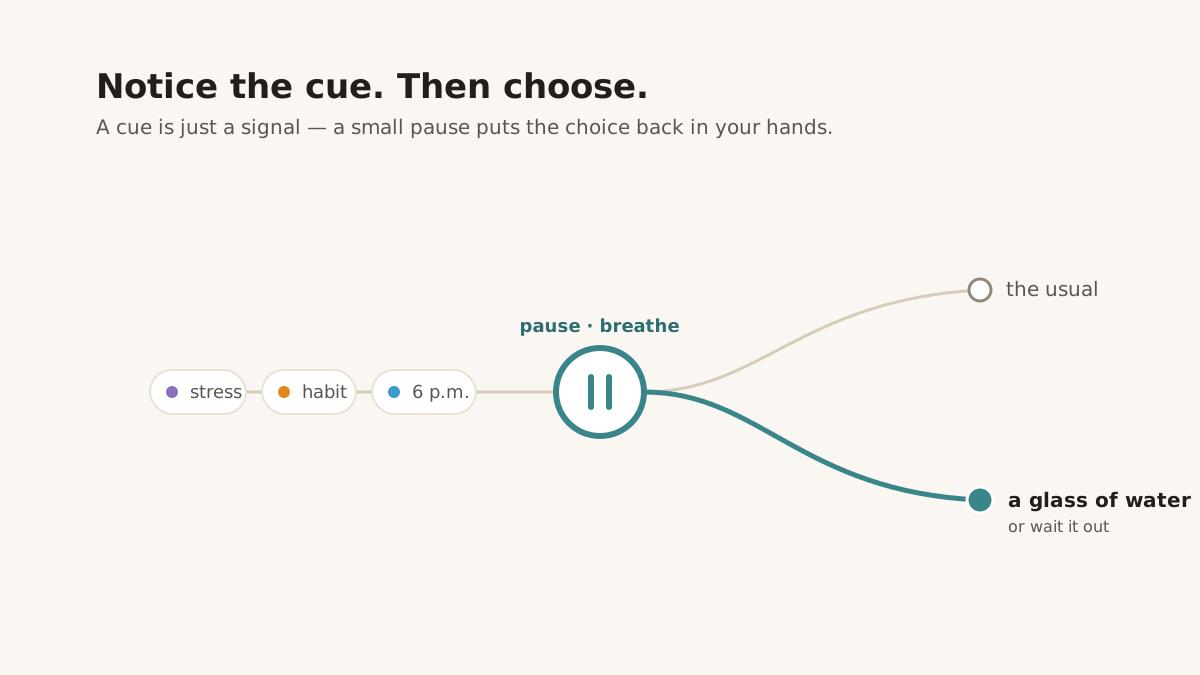
Most overshooting traces back to a handful of cues — stress, boredom, habit, certain people or places. Here's how to spot your triggers and build a calm pause before the next drink.
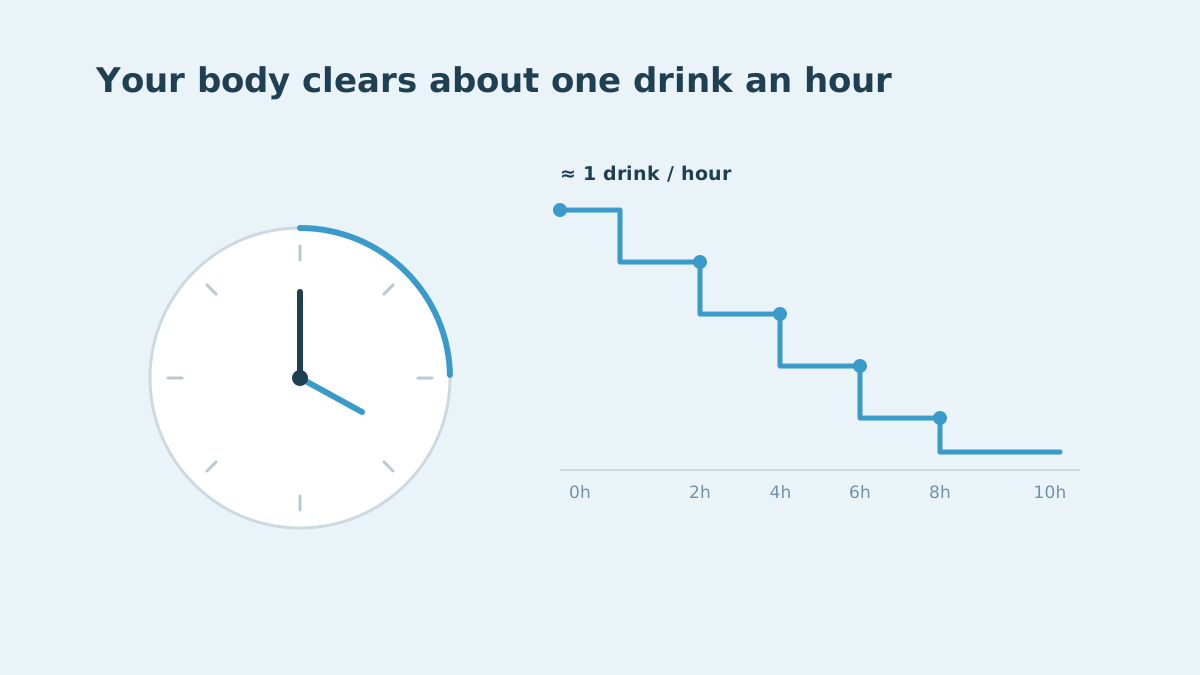
Your body clears roughly one standard drink an hour, and nothing speeds it up. Here's how alcohol is metabolized, how long tests can detect it, and what changes the rate.