The science
Hangxiety: why alcohol spikes next-day anxiety
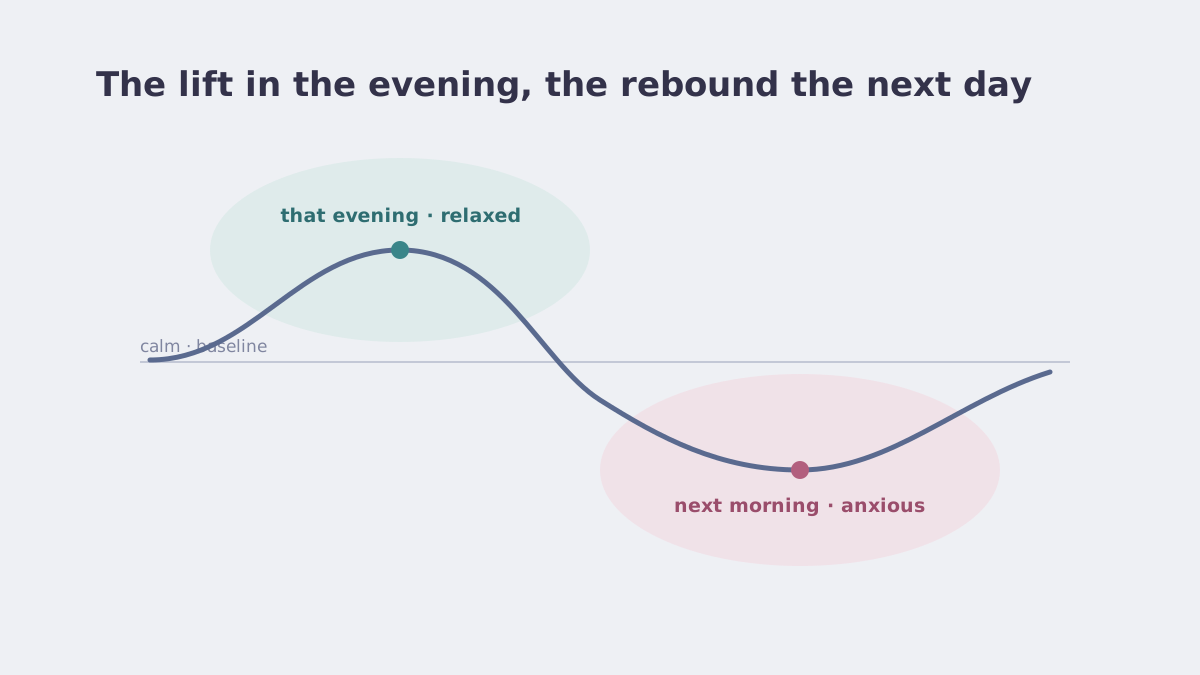
That uneasy, jittery morning after drinking has a name and a mechanism. Here's why alcohol calms you at night and rebounds into anxiety the next day — and what helps.
Alcohol is nearly as calorie-dense as fat, carries no nutrition, and nudges you to eat more — while your body burns it before fat. Here's the real link between drinking and weight.
Alcohol’s effect on weight is bigger than most people expect, and it’s not only about the calories in the glass. It’s calorie-dense, nutritionally empty, hard on your fat-burning, and quietly tied to eating more.
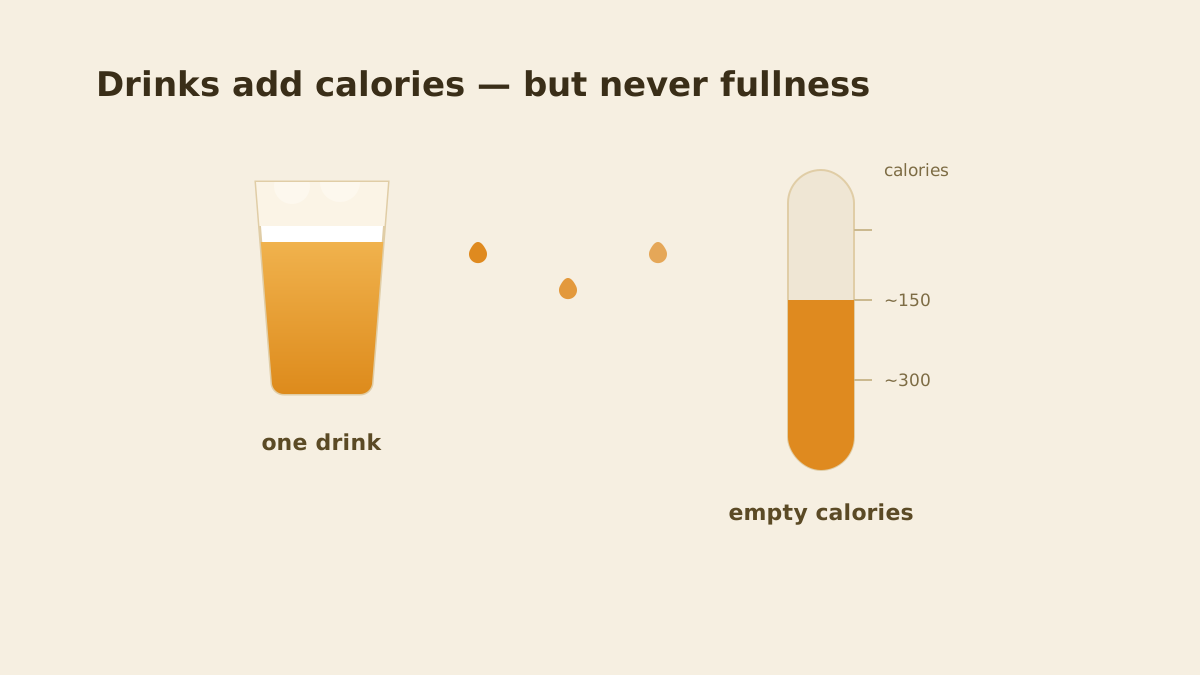
Alcohol carries about 7 calories per gram — compared with 4 for carbs and protein and 9 for fat, per MedlinePlus (NIH). So gram for gram, it’s much closer to fat than to a carb. Because one US standard drink contains 14 g of pure alcohol, that’s roughly 98 calories from the alcohol alone (14 × 7) before any mixers — and a real drink adds more on top: a beer is around 150 calories, a glass of red wine ~125, a 1.5 oz spirit ~97 (MedlinePlus).
Those calories come with essentially no nutrition. MedlinePlus is blunt about it: alcohol “has calories… but no nutrients.” So unlike food, drinks add to your daily total without contributing anything your body needs — and without making you feel full.
When you drink, your body treats alcohol as a priority fuel. The Cleveland Clinic explains that your body “prioritizes metabolizing it over other nutrients,” slowing the fat-burning process while the alcohol is dealt with. The calories you just drank get used first; the fat you hoped to burn waits.
Drinking also loosens your food choices. MedlinePlus notes that “people tend to make poor food choices when drinking alcohol,” and a meta-analysis found that acute alcohol increases food energy intake — people don’t eat less to offset the drinks’ calories; they tend to eat more. The late-night order after a few rounds isn’t a coincidence.
And the mixers matter: sugary cocktails can be calorie bombs. MedlinePlus lists a White Russian at ~568 calories and a piña colada at ~380.
The popular story oversimplifies. Harvard Health says beer isn’t specifically responsible for the belly — excess calories are, though beer “can add to abdominal obesity by contributing calories.” The Cleveland Clinic agrees there’s no evidence beer adds fat specifically to the abdomen; a firm “beer belly” is visceral fat from excess calories overall. In other words, it’s a calorie story, not a beer-magic story.
Because alcohol calories are easy to miss and don’t fill you up, they’re some of the easiest to remove. A few fewer drinks a week can subtract hundreds of calories — plus the meals you don’t over-order without them. You don’t need a diet; you need to see the number.
That’s the practical move: log your drinks and let the calorie estimate add up across the week. Seeing “this week’s drinks ≈ X calories” is, for a lot of people, the most motivating number in the whole app. PitchCount estimates it for every drink you log.
One US standard drink holds 14 grams of pure alcohol, and alcohol has about 7 calories per gram — so roughly 98 calories from the alcohol alone (14 × 7), before any mixers or carbs. A typical beer is around 150 calories, a glass of wine ~125, and a 1.5 oz spirit ~97.
Three reasons stack up — alcohol is calorie-dense (~7 cal/g, close to fat) with no nutrients, your body burns it before it burns fat, and it tends to increase appetite and lower your guard around food.
Not specifically. Reputable sources say the culprit is excess calories and visceral fat, not beer itself — any drink (and any over-eating) can contribute. Beer just makes it easy because the calories add up fast and go down easily.
Often, yes. Alcohol calories are easy to overlook and don't make you feel full, so removing a few drinks a week can quietly subtract hundreds of calories — plus you tend to eat a bit better without them.
This is general information, not medical advice. If you're concerned about your drinking or think you may be dependent, please talk to a healthcare professional.
That uneasy, jittery morning after drinking has a name and a mechanism. Here's why alcohol calms you at night and rebounds into anxiety the next day — and what helps.
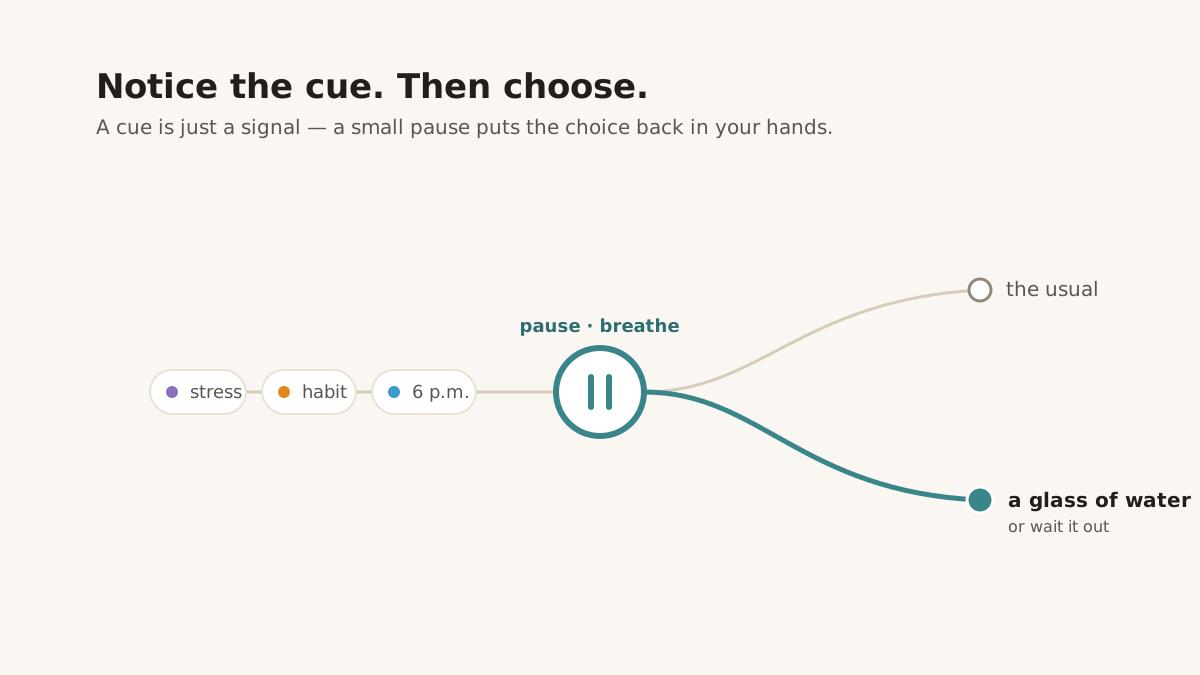
Most overshooting traces back to a handful of cues — stress, boredom, habit, certain people or places. Here's how to spot your triggers and build a calm pause before the next drink.
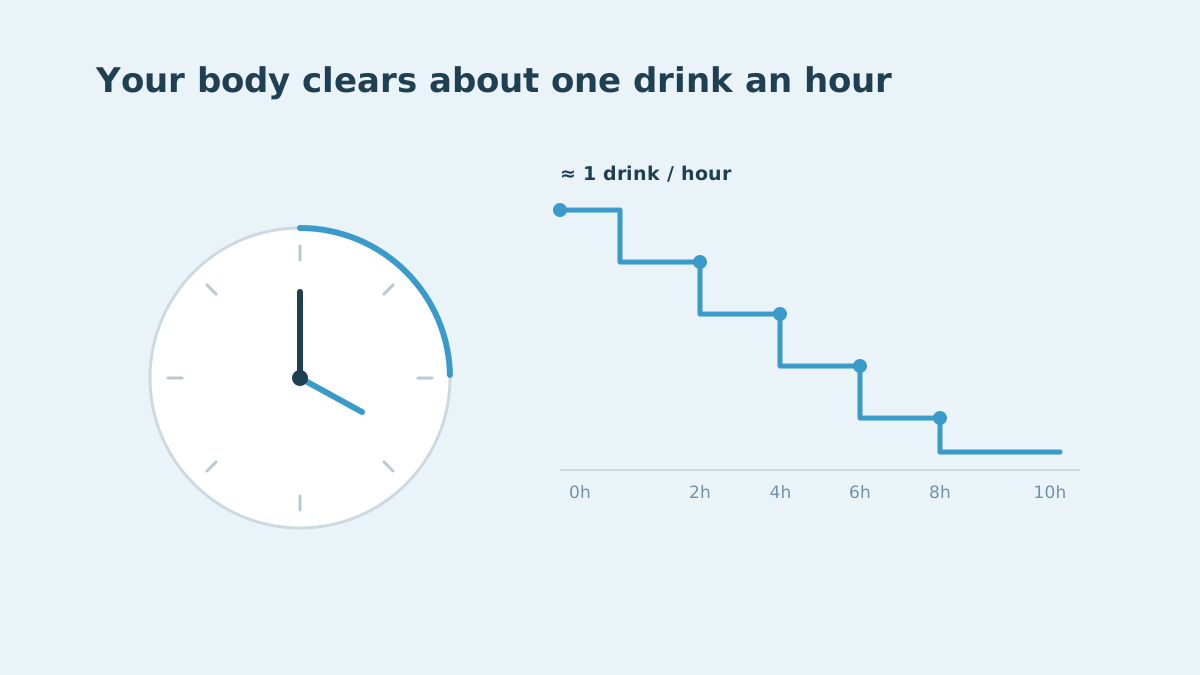
Your body clears roughly one standard drink an hour, and nothing speeds it up. Here's how alcohol is metabolized, how long tests can detect it, and what changes the rate.